
The 5 Marks
“The authentic Sodality must mould Christians who, filled with a holy discontent, are ardent followers of the Cross and valiant servants of the Church. Their ideal is Our Lady who has crushed the serpent’s head, who stood beneath the Cross and who epitomizes the Church.” – Hugo Rahner, SJ
Ecclesial/Communal

‘Sodality’ comes from the Latin word sodalis, meaning ‘a very close friend or companion.’ A Sodality is a group of companions, of friends in the Lord. The Sodality began just as the Church began, with a group of young people gathering around a master. Jesus is the first and true master, and the Jesuit director of the Sodality is His companion and acts as the master in His stead. Those gathered around the Jesuit are the community of disciples, always striving to approximate to the ideal communion of the apostolic Church (Acts 4:32-33). The communal dimension of the Sodality is thus the foundation upon which the other dimensions grow. Fr. Daniel Lord, SJ describes this mark as follows, “Membership in the Sodality makes you an intimate member of the family of Our Blessed Lady. Quite rightly Sodalists are called Children of Mary. In a very special way they are brothers and sisters and comrades in the Sodality spirit.” (The Sodality Manual, p. 30)
Christocentric

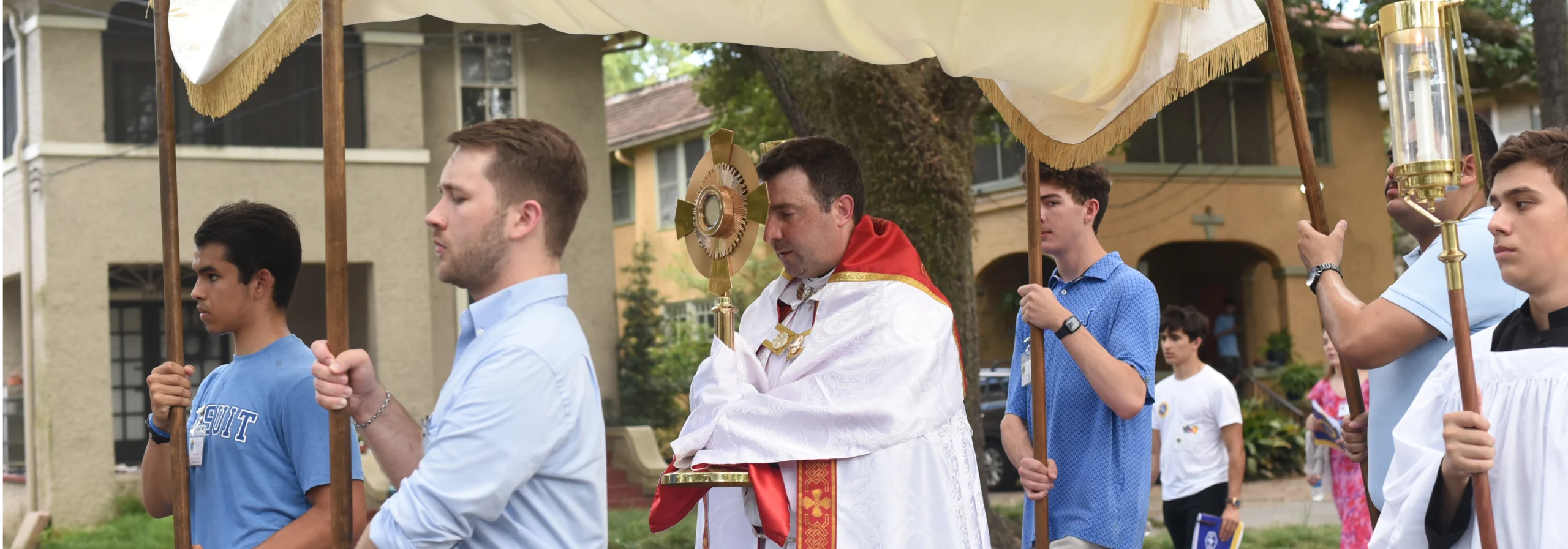
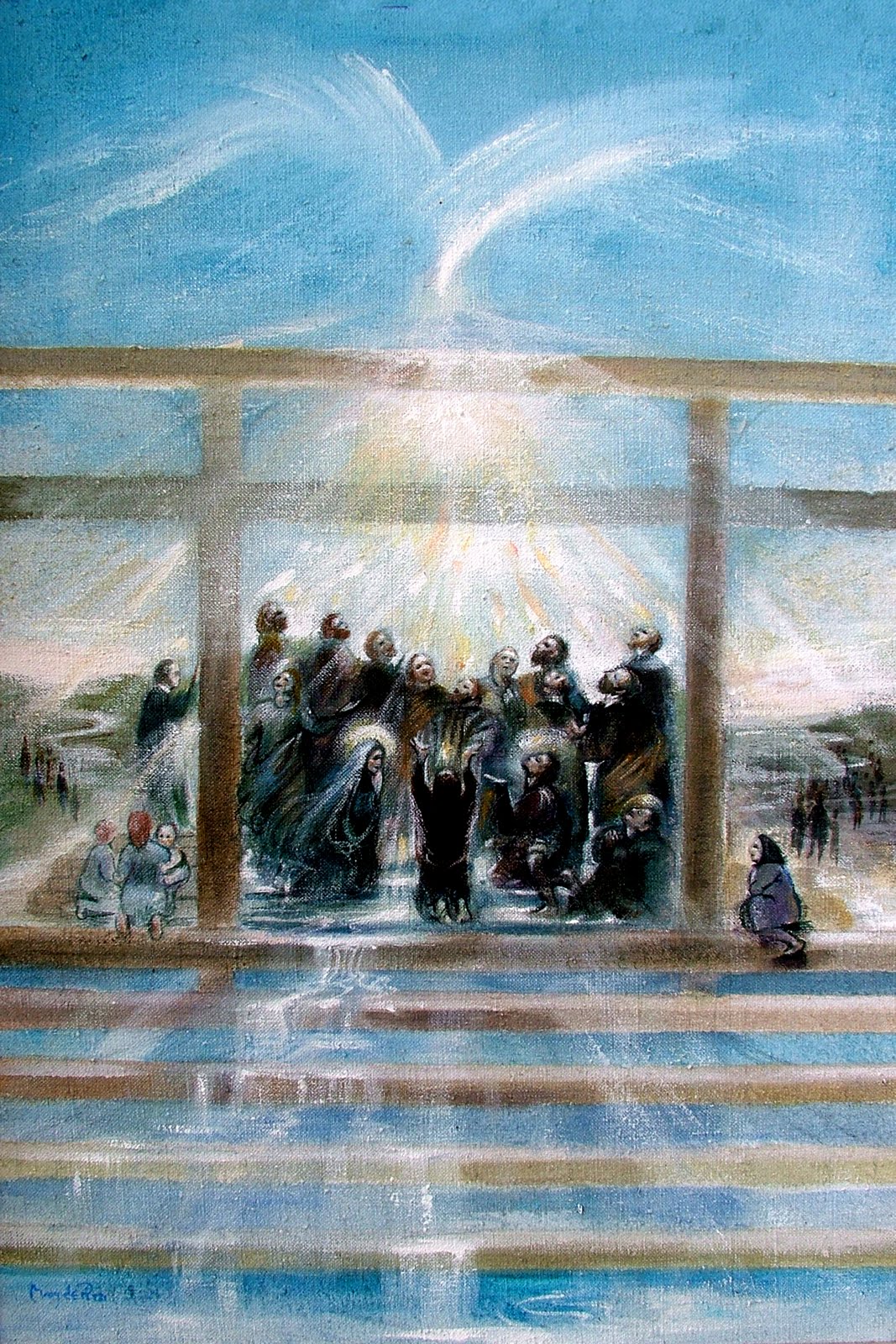
The Marian Sodalities strive to conform their members to the person of Jesus Christ (Rom. 8:29). The 1601 Manuale Sodalitatis describes this goal as follows, ‘The first aim of a Sodality must be the cultivation of a more perfect life like to the life of Christ.’ All of the activities of the Sodality, from pray to community to ministry, help the Sodalist to this end. Most important among those activities in drawing close to Christ are the participation in a weekday Mass, monthly confession, and the annual silent retreat.
The Marian Sodalities take the spiritual itinerary for conforming one’s soul to Christ from the Spiritual Exercises of St. Ignatius. In the Spiritual Exercises Jesus stands as the eternal King calling the retreatant to follow him in spreading the Kingdom of God in the world, in the midst of confrontation with the forces of Satan (SpEx. 91-98, 143-47). This call develops through the retreat into an invitation to imitate Christ the king, especially in poverty and humility (SpEx. 147, 167), and to share in his salvific mission, especially in His suffering and death (SpEx. 203). This call finds concrete expression for the retreatant in service in the Church. The grace of the Second Week of the retreat summarizes the movement of the soul to union with Christ through, “an intimate knowledge of our Lord, who has become man for me, that I may love Him more and follow Him more closely.” (SpEx., 104) The Sodalist slowly appropriates these graces through the annual silent retreat, and in his meditation throughout the year.
The interior conformity to Christ leads to concrete service to Him in His Church. Fr. Hugo Rahner, SJ explains, “The authentic Sodality trains its members to open their eyes to the Church, militant and suffering, in its earthly pilgrimage. To put this more accurately and in a more Christian way; the Sodality must become a brave friend of Our Lord Jesus Christ visible in the modern Church, Christ who here and now wants to carry on the fight with the help of His faithful friends who understand His needs and see Him in their neighbour. Because of its origins the Sodality must be an association that remains forever young in spirit, that sets itself to the task at hand and wants to produce some tangible, concrete good, that can obey and subordinate itself to something bigger than itself.” (True Source of the Sodality Spirit)
Marian
With the Christocentric dimension of the Sodality takes as its model Our Lady, who surrendered herself completely to God at the annunciation (cf. Lk. 1:38), who stood beneath the cross suffering with her son (Jn. 19:26-27), and who was at the heart of the Apostolic Church (cf. Acts 1:14). Hugo Rahner, SJ beautifully articulates the intermingling of the Christocentric and Marian dimensions of the Sodality, “It is no accident of history that the first Sodality in Rome was dedicated to the mystery of the Annunciation. Nor was it pure coincidence that in 1522 Ignatius at Montserrat made his own dedication to Mary on the feast of the Annunciation. On that occasion he offered his weapons to his Queen and exchanged his worldly garb for pilgrim’s dress. Under the banner of his Queen he turned away from the vanity of the world toward the poor Christ. This is the conversion, which must take place in the soul of every Sodalist. This is the realization in the spiritual order of the juridical fact that every Sodality is aggregated to the Primaria of the Annunciation. All real putting on of Christ, all growth into a ‘genuinely Catholic adulthood’ within the Sodality means to imitate Mary’s Fiat, its design in Christ’s redemption of the world. This is the Fiat that accepts the Cross of Christ that challenges all that is noble in the soul, that longs for a more perfect following of the suffering of Christ. In this way the Sodalist must learn through the Sodality to love Mary as the exalted Queen of his magis. She is Our Lady of Christian Discontent. She will lead him to the Cross.” (True Source of the Sodality Spirit)
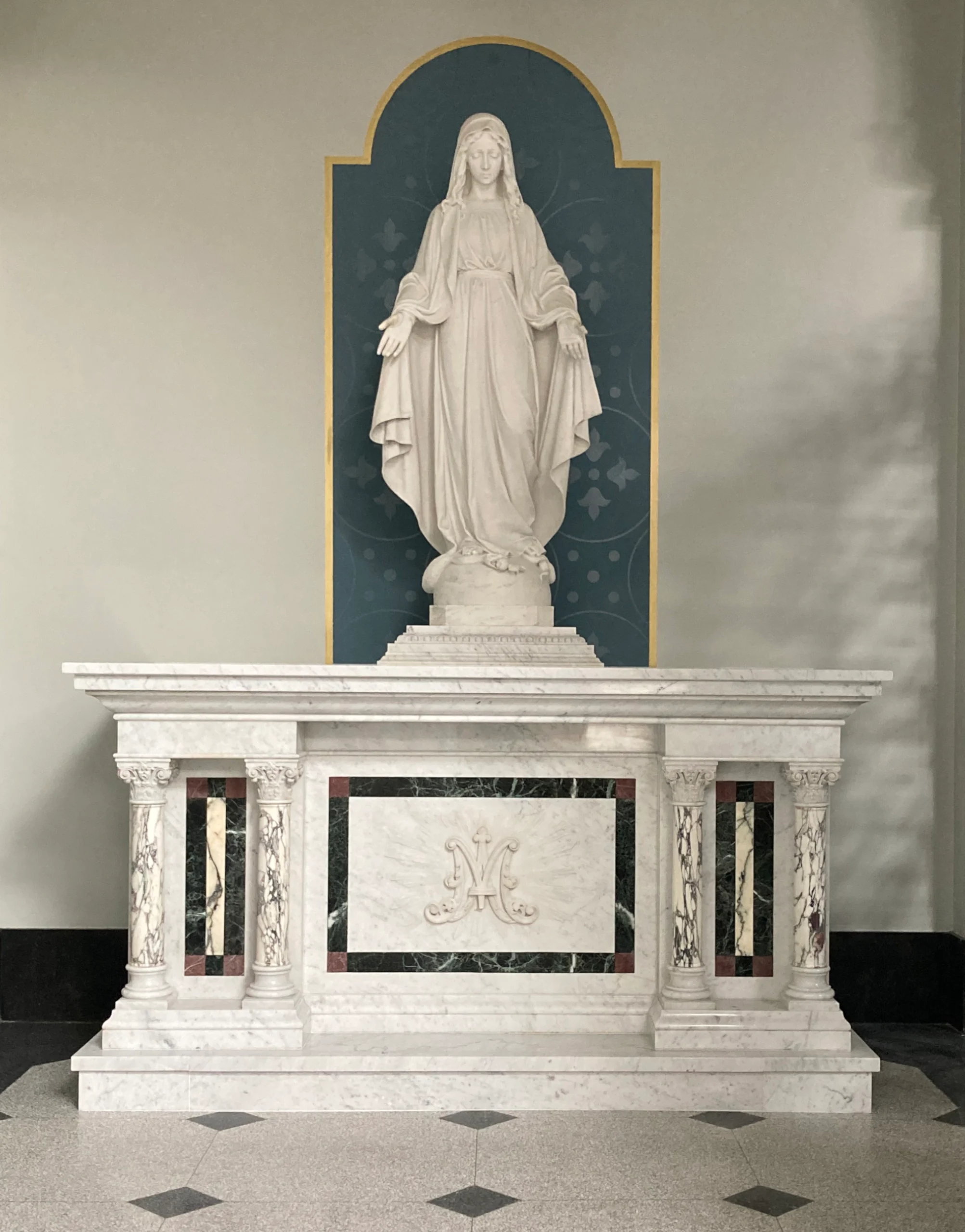
Sodalists express their devotion to Mary by making a formal consecration to Her as part of their final initiation into the Sodality. Pope Pius XII describes the Marian consecration as follows, “These sodalities are to be called Sodalities of Our Lady not only because they take their name from the Blessed Virgin Mary, but especially because each Sodalist makes a profession of special devotion to the Mother of God and dedicates himself to her by a total consecration, under-taking, though not under the pain of sin, to strive by every means and under the standards of the Blessed Virgin for his own perfection and eternal salvation, as well as for that of his neighbours.” (Bis Saeculari, Art. VIII) The consecration to Mary binds the Sodalist to a lifelong spiritual commitment, and is at the heart of the spirit of the Sodality.
Formative
“For the Sodality, deeply formed means that a Sodalist grasps the truths of the Catholic Faith as one integrated whole, yet touching upon every aspect of life and every part of the universe. The Faith is more than an assent to propositions and a commitment to practices; it is a worldview, a social imaginary, and a way of life. Deeply formed means that a Sodalist’s prayer life is rich and challenging, drawing him or her ever more closely into union with Christ, and modeled after Mary’s contemplative discipleship. Deeply formed means that they can engage in various apostolic activities with creativity and zeal. Deeply formed means that, as Pope Pius XII put it, Sodalists, “can be proposed as models to their companions of Christian life and of apostolic endeavour.” -Bis Saeculari Art. X
The common rules of the Sodality propose a way of life that itself forms the members in prayer and virtue. Pope Pius XII exhorts the Sodalists in the importance of the practices that the common rules outline, “it is of the greatest importance that the observance of the rule and constitutions of the Sodalities should be considered of much more importance than the numbers of Sodalists, for through them the members are perfectly lead to that perfection of spiritual life from which they can scale the heights of sanctity and especially be means of those steps which are most useful in forming perfect and wholehearted followers of Christ. These helps are the Spiritual Exercises and the daily practice of meditation upon things divine; examination of conscience; the frequentation of the Sacraments; child-like docility in their relations with a definite spiritual director; the total and continual dedication of oneself as a client of the Virgin Mother of God; and the firm determination to devote oneself to the promoting of one’s own perfection and that of others.” (Bis Saeculari, No. 4)
Magnanimous
The Marian Sodality satisfies lay people who have a holy restlessness for more, magis, and desire to commit themselves to greater spiritual and apostolic activities than the ordinary Catholic obligations. The members constantly strive to grow more fully, to give more generously, and to sacrifice more lovingly to Christ, with Mary, in community with others, and for the salvation of souls. The Sodalists concretize this striving in the requirements of daily prayers, weekday Mass, regular meetings, monthly confession, monthly service, and an annual retreat.
Again, we draw upon Hugo Rahner, SJ to explain the importance of this last mark of the Sodality, magnanimity. “The Sodality enrolls men who have written the word more on their standards. They should be Sodalists who in the meditation on the kingdom are called ‘prompt’ and ‘diligent’, who want to lay at the feet of their King and Lord ‘offerings of greater value’. This oblation consists in a readiness to become like the king who through His labours alone brought the world back to the Father. Basically this means self-denial, one’s own sanctification through assimilation to the Crucified. Even as early as 1601 we read in the Manuale Sodalitatis: ‘The first aim of a Sodality must be the cultivation of a more perfect life like to the life of Christ.’….It is here, above all, that the élite are distinguished from the masses.” (True Source of the Sodality Spirit)


Take the Next Step
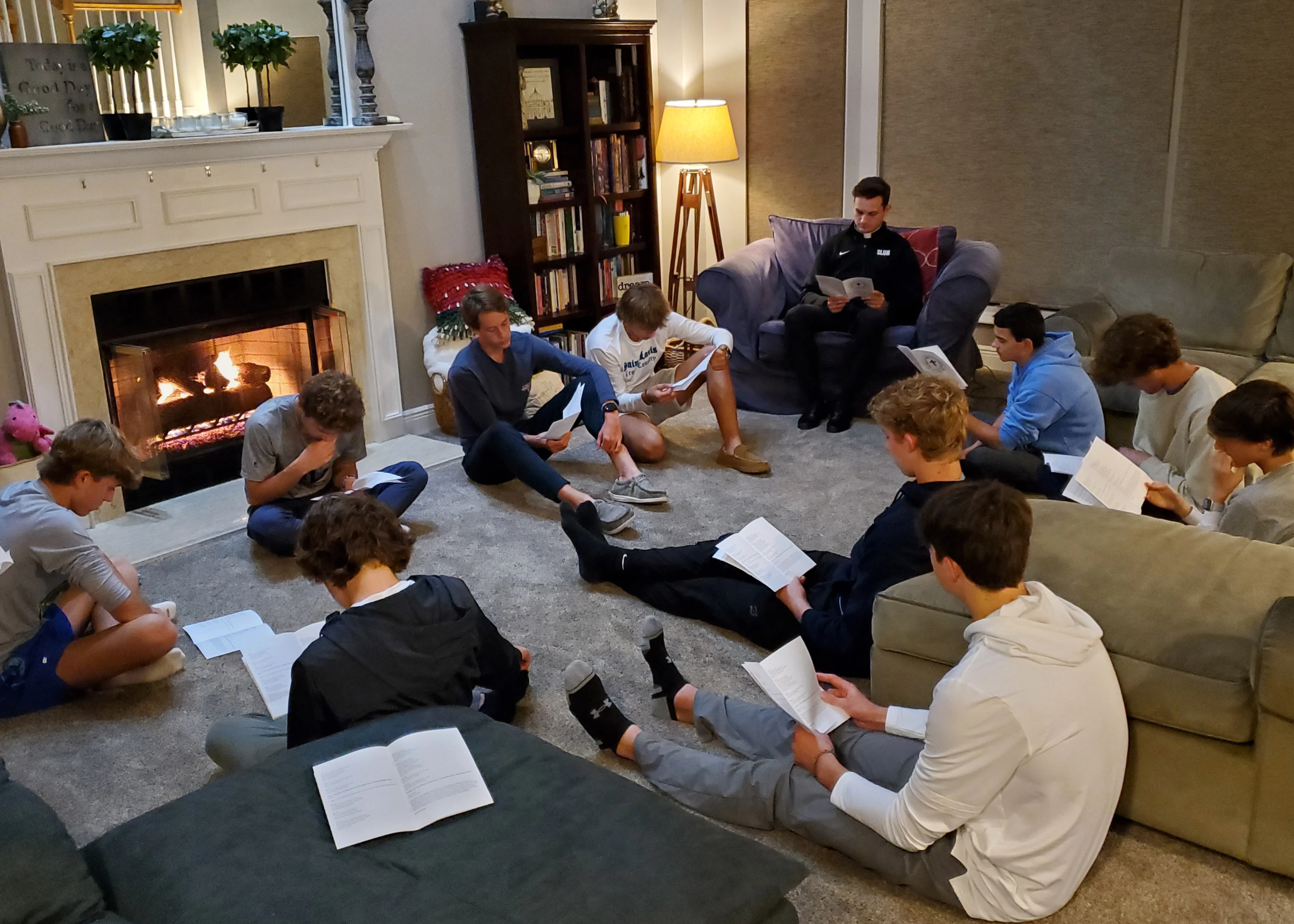
Sodalities are meant to be lived in community. See if there’s a sodality near you and take the next step.